Wabi Sabi Hand-Painted Wall Art: Is It Suitable for Minimalist Homes?

What Is Wabi Sabi? How Is It Different from Minimalism?
The Core Philosophy of Wabi Sabi
Wabi Sabi is a Japanese aesthetic and philosophy rooted in 15th‑century Zen Buddhism, refined by tea master Sen no Rikyū. It combines Wabi (rustic simplicity, quietness, embracing modest living) and Sabi (beauty found in the patina of time and wear). Rather than chasing flawless perfection, Wabi Sabi accepts impermanence and celebrates imperfection. In interior design, it favours soft curves, weathered edges, and natural material textures, creating spaces that feel lived‑in and authentic. As designer Asha Winn put it: “Wabi Sabi is less a specific style and more a mindset – creating spaces that feel real, tactile, and alive.”
Key Differences Between Wabi Sabi and Minimalism
Many people confuse Wabi Sabi with minimalism, but their philosophical origins are distinct. Minimalism stems from Western modern art, pursuing pure forms, precise geometry, and objectivity. Wabi Sabi, on the other hand, is deeply rooted in Eastern Zen, celebrating asymmetry, irregularity, and unadorned natural beauty. Here’s a quick comparison:

| Aspect | Minimalism | Wabi Sabi |
|---|---|---|
| Philosophical origin | Western modern art – form follows function | Japanese Zen – embrace transience & imperfection |
| Aesthetic preference | Precision, symmetry, order | Asymmetry, roughness, natural flaws |
| Material choice | Smooth, industrial, high‑precision | Natural, handmade, traces of time |
| Colour palette | Neutrals, black & white | Earth tones, low saturation, warm greys |
| Core spirit | Less is more – functionality above all | Beauty in austerity – finding richness in imperfection |
Both styles advocate simplicity, but minimalism is a rational subtraction, while Wabi Sabi is an acceptance – accepting time’s marks, handmade warmth, and the unique beauty found in flaws.
Can the Two Blend Together?
In practice, minimalism and modern Wabi Sabi are not opposites – they often complement each other beautifully. One of modern Wabi Sabi’s innovations is exactly this fusion: preserving the “less is more” ethos while introducing natural materials and warm tactility. In a Wabi Sabi interior, designers deliberately reduce unnecessary decorations, keeping only essential furniture and objects while emphasising negative space. This intentional emptiness not only frames outdoor views but also lets air and time flow. The blend essentially marries minimalist restraint with Wabi Sabi’s warmth.
Why Is Wabi Sabi Hand-Painted Wall Art Suitable for Minimalist Homes?

Shared Aesthetic: “Less Is More”
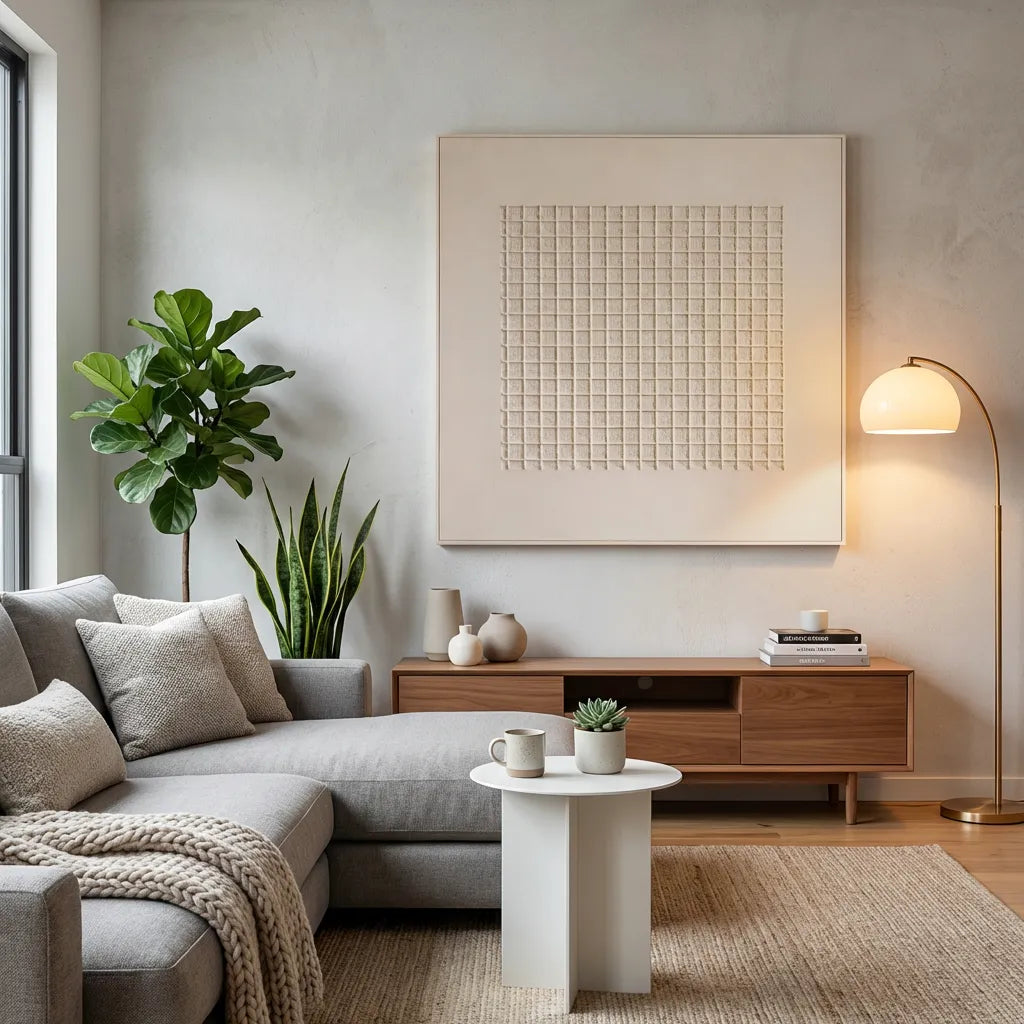
Wabi Sabi hand-painted wall art naturally fits minimalist homes because both share the same core logic – they never rely on clutter but convey emotion through restrained brushwork and thoughtful negative space. As many designers observe, wall art in a Wabi Sabi room acts as the “finishing touch”: one single hand‑painted abstract texture piece can establish a visual focal point on a blank wall without disturbing the room’s pure, clean look. This “one piece does the work of ten” approach aligns perfectly with minimalism’s principle.
Emotional Value of Wabi Sabi Wall Art
In contemporary home design, Wabi Sabi wall art is leading a shift from “cold and sleek” to “warm and soulful”. Industry data shows that since late 2025, global searches for earth‑toned, textured wall art and pure white geometric pieces have increased by over 60%. Designers are moving away from overly polished, glossy surfaces and embracing wall decorations rich in texture and emotional depth.
This trend reflects a pain point of pure minimalism: black, white, grey and industrial straight lines can sometimes feel too cold and distant. Wabi Sabi hand-painted wall art fills that gap perfectly – its natural textures, hand‑made brushstrokes and low‑saturation colours inject warmth without breaking the minimalist code, making a space “breathe” instead of just “look distant”. The concept of organic minimalism confirms this: mixing rough and soft textures – linen, rattan, raw wood, stone – and letting the materials speak through neutral tones makes a minimalist space rich without being chaotic.
Real‑Life Success Stories
Countless interiors prove that Wabi Sabi and minimalism work beautifully together. One Hong Kong homeowner described how a single hand‑made 3D textured canvas transformed her “cold and empty” minimalist living room into “a serene, soulful home”. More and more modern design projects show that when Wabi Sabi’s natural grain meets minimalism’s clean lines, the space retains a restrained outline while gaining handmade warmth and the beauty of time.
How to Choose the Right Wabi Sabi Hand-Painted Wall Art for Your Minimalist Home?

Colour Selection
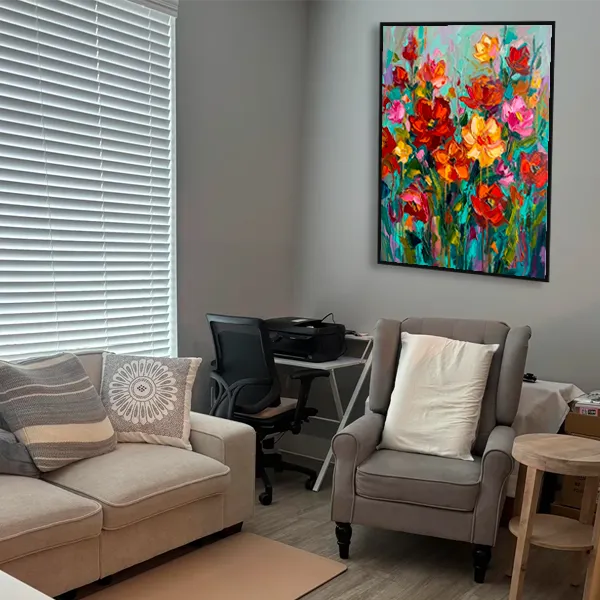
Choosing Wabi Sabi wall art for a minimalist space starts with colour. The safest palette is low saturation + earth tones – off‑white, grey‑brown, light camel, matte black, with a touch of warm grey or rust as accent. Avoid fluorescent greens, bright orange, or any high‑chroma colour – they will shatter the tranquil atmosphere of a minimalist room. Layering light and deep wood tones can act as a “temperature anchor”, creating a cocooning warmth with natural grain and soft hues.
Why Texture Matters
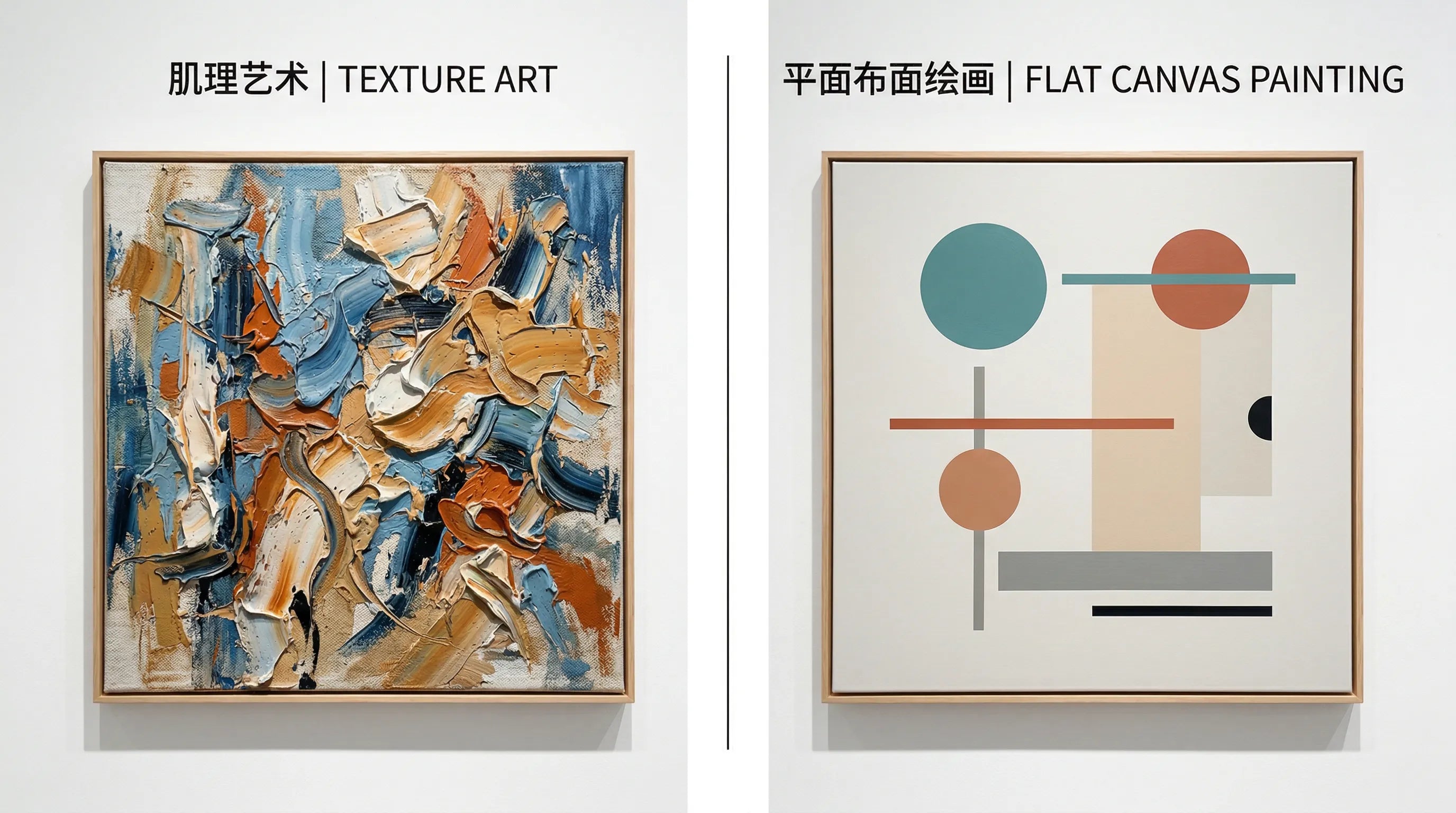
What makes a truly great hand-painted abstract wall art piece is its tactile quality. Every brushstroke in a genuine hand‑painted work has thickness variation; where paint builds up, natural undulations form, and when light hits them, the shadows create a “sculpted” depth. Machine‑printed pieces, by contrast, stay “flat as a print”. Prioritise pieces painted on pure cotton or linen canvas – these rough, resilient bases can hold heavy paint textures and create an elegant contrast with the clean minimalist wall.
Sizing & Placement Golden Rules
In a minimalist home, follow the rule: one large piece over several small ones. For a living room sofa wall, a size between 80×120cm and 100×150cm works best – a single large canvas holds the entire wall’s visual weight. For smaller spaces, a group of 2‑3 smaller paintings arranged in an offset cluster creates an “art wall” effect. Always maintain enough negative space around the artwork – the piece should anchor the wall, but the wall still needs room to breathe. Wabi Sabi wall art typically suits modern minimalist, Japanese, Japandi, and Nordic styles, especially for those who appreciate understated elegance.
Quick Selection Checklist
✅ Colour: off‑white, grey‑brown, light camel, matte black – low‑saturation earth tones
✅ Material: pure cotton or linen canvas, hand‑painted, obvious texture
✅ Size: living room ≥80×120cm; bedroom or entry 60×80cm
✅ Pair with: raw wood furniture, linen fabrics, ceramic vessels
❌ Avoid: high‑saturation bright colours, machine‑printed flat art, ornate metallic frames
Frequently Asked Questions (FAQ) About Wabi Sabi Hand-Painted Wall Art
What home styles does Wabi Sabi hand-painted wall art suit?
It suits not only minimalist homes but also modern contemporary, Scandinavian, Japanese, Japandi, and organic modern styles. Ideal for anyone seeking a quiet, refined atmosphere.
What’s the difference between hand‑painted wall art and a print?
The difference is huge. Genuine hand‑painted art has 3D texture, visible brushstrokes, and is a one‑of‑a‑kind piece. Prints are flat and lack artistic value. When shopping, look for descriptions like “pure cotton canvas”, “acrylic/oil painting”. Quality hand‑painted canvases also come with anti‑vibration metal hanging hooks for easy wall mounting.
How long does a hand‑painted canvas last?
Hand‑painted oil or acrylic canvases easily last over 10 years. Avoid direct sunlight and high humidity; no frequent replacement is needed. Dust gently with a soft dry cloth – never use corrosive cleaners.
Will Wabi Sabi wall art ruin the “clean” look of minimalism?
Not at all. A well‑chosen piece of Wabi Sabi hand-painted wall art does not ruin the clean look; instead, it becomes the “drumbeat” of the space – establishing a visual focal point and emotional warmth on a restrained foundation. Just choose the right size and colour, avoiding overcrowding or jarring hues.
Should I buy framed or frameless?
Both work. Frameless canvas with a solid wood inner stretcher delivers a purer minimalist look. A slim black or raw wood narrow frame can strengthen the artwork’s boundary – ideal when you want a clear separation from the wall colour. Choose based on your wall colour and furniture material.
Conclusion: Finding Perfection in Imperfection
The blend of Wabi Sabi hand-painted wall art with minimalist homes is a rethinking of what “beauty” means. Minimalism teaches us to subtract – remove the redundant, keep the essential. Wabi Sabi teaches us to find richness in imperfection – accept time’s marks, embrace handmade warmth. Together, they give a minimalist space not only “cool” but also “warm”; not only “empty” but also “meaningful”.
More Inspiration & Recommendations
If you’re looking for original Wabi Sabi hand-painted wall art that fits your minimalist aesthetic, explore more at https://www.inkich.com/ . Every hand‑painted piece blends natural textures with minimal elegance, bringing warmth and quiet artistry to your home.
References:
-
Apartment Therapy. Why Designers Say Wabi-Sabi Style Is Going to Be Everywhere Next Year. https://www.apartmenttherapy.com/wabi-sabi-style-interior-design-37507766
-
Seattle Interior Design Academy. The Difference Between Wabi Sabi and Minimalism – Don’t Confuse Them!. https://www.seattleinterior.com.tw/blog/
-
CIFF Shanghai Design Source. New Home Aesthetics Trends: From Wabi Sabi to Futuristic. https://www.ciff-sh.com/hyzx/289
-
IrisLeeGallery. *Wabi-Sabi Wall Art: Why 3D Textured Minimalist Painting Defines 2026 Interior Style*. https://irisleegallery.com/blogs/hot/wabi-sabi-wall-art-why-3d-textured-minimalist-painting-defines-2026-interior-style
-
IrisLeeGallery. *Wabi-Sabi Wall Art and 3D Textured Canvas: Defining Modern Home Decor Trends 2026*. https://irisleegallery.com/blogs/hot/wabi-sabi-wall-art-and-3d-textured-canvas-defining-modern-home-decor-trends-2026
-
AD Middle East. 21 Organic Minimalism Home Decor Ideas To Bring Natural Warmth Into Minimalist Interiors. https://www.admiddleeast.com/21-organic-minimalism-home-decor-ideas