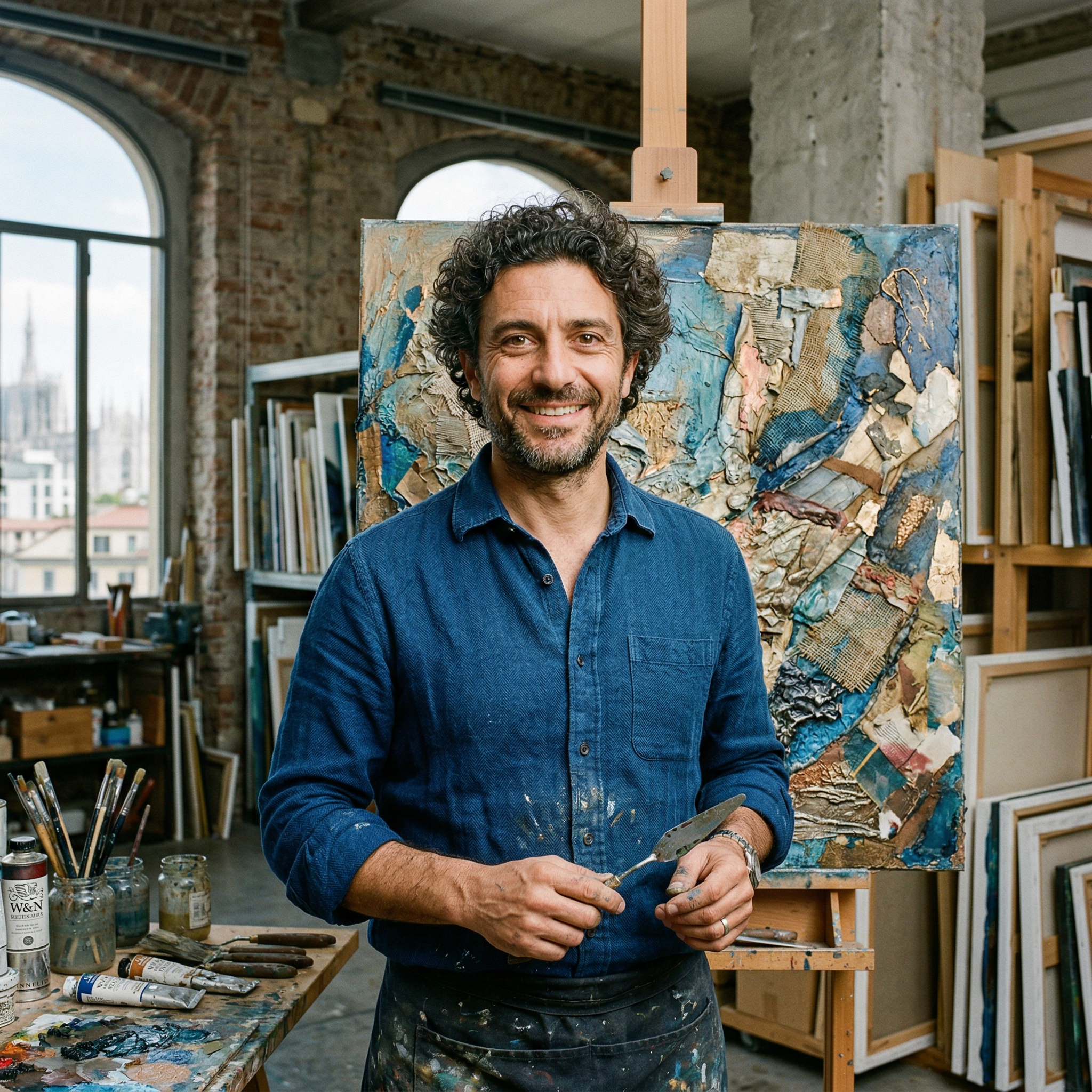
Style: Abstract Minimalism
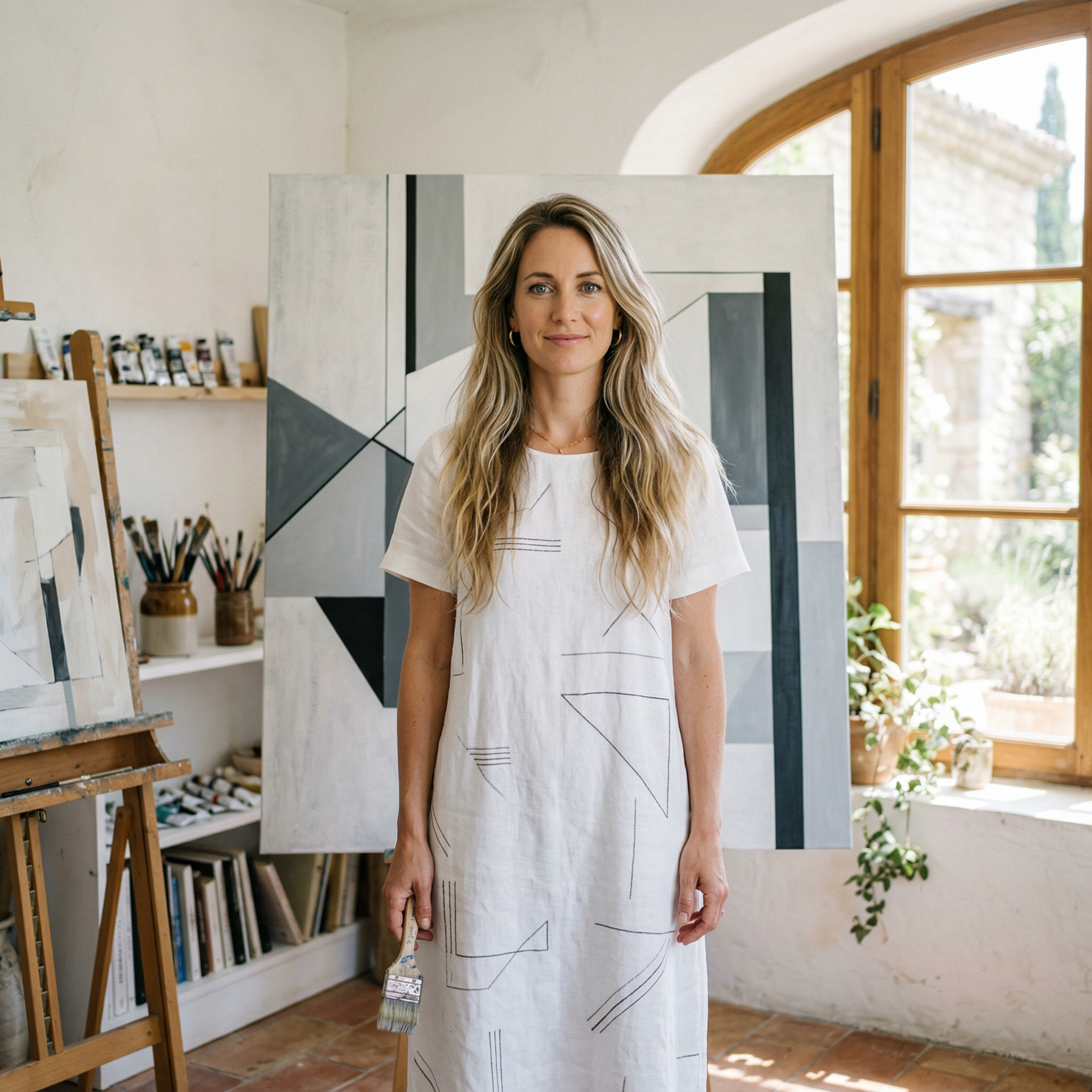
Based in: Provence, France
 Elara Montclair grew up surrounded by the lavender fields of southern France, where the rhythm of life moves to the slow cadence of the Mistral wind and the soft shift of light across rolling hills. Her early years were filled with silence—no clamor of city streets, just the whisper of lavender stems brushing against one another, the distant trill of a cicada, and the vast, unbroken expanse of open skies that stretched from the foothills of the Alps to the Mediterranean Sea. These elements—quiet, light, movement, and stillness—did not merely shape her childhood; they seeped into her bones, becoming the quiet heartbeat of every canvas she creates, a subtle homage to the land that taught her to see beauty in restraint.
After studying fine arts in Paris, a city bursting with bold artistic traditions and the weight of art history, Elara made a deliberate choice: to turn away from the rigidity of traditional realism, with its demand for precise representation and literal interpretation. For her, realism felt like a cage—one that confined emotion to the edges of a subject, rather than letting it breathe freely. Instead, she embraced minimal abstraction, a style that allowed her to distill the essence of her experiences, memories, and emotions into their purest forms. It was not a rejection of skill, but a redefinition of it: to paint not what the eye sees, but what the soul feels.
 Elara’s art is rooted in a profound artistic attitude: art as a dialogue with stillness. In a world obsessed with noise, speed, and constant stimulation, she believes that art should be a sanctuary—a space where the viewer can slow down, quiet their mind, and connect with the quiet parts of themselves. She rejects the idea that art must be loud, complex, or provocative to have meaning; instead, she champions subtlety, nuance, and intentionality. “Art is not about demanding attention,” she once said in an interview. “It is about offering a pause. A moment to breathe, to be present, to feel something that words cannot name.” This attitude is reflected in every choice she makes—from the colors she selects to the compositions she crafts, each decision is guided by a desire to create calm, not chaos.
Her creative philosophy) revolves around the idea of “emotional space”—the intangible, quiet tension between movement and stillness, presence and absence, light and shadow. For Elara, a painting is not a static object; it is a living, breathing entity that interacts with the viewer and the space it occupies. This is where her guiding belief comes from: “A painting should breathe with you.” To her, this means that her work must be porous—open enough to absorb the viewer’s emotions, yet grounded enough to offer a sense of stability. She does not want her pieces to tell a fixed story; instead, she wants them to be a mirror, reflecting the quiet truths and unspoken feelings of those who spend time with them.
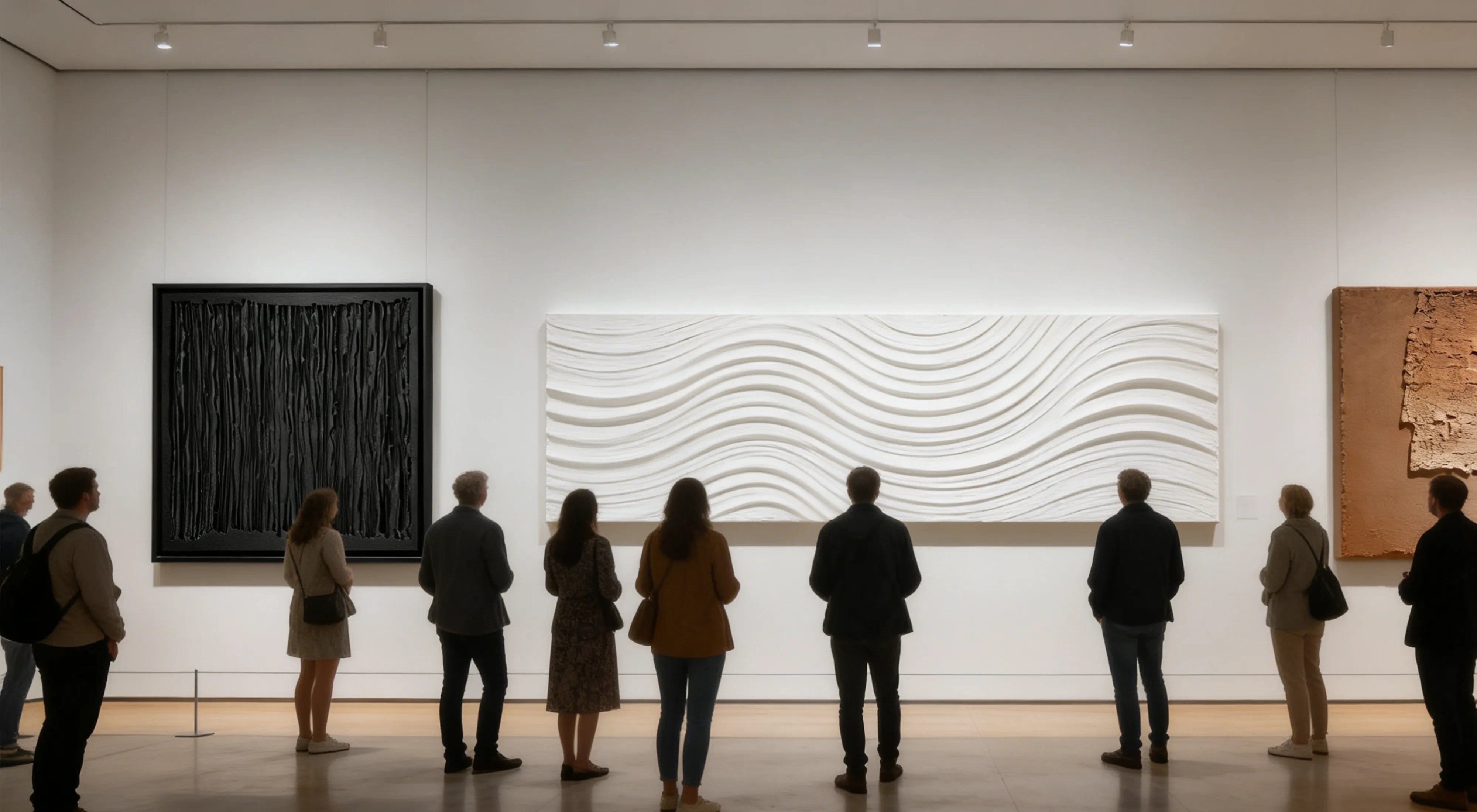
To bring this philosophy to life, Elara’s pieces often feature soft neutrals—muted beiges, pale grays, warm taupes, and hints of lavender (a subtle nod to her Provence roots)—layered textures that invite touch, and restrained compositions that leave room for the viewer’s imagination. She works with thin, translucent layers of paint, building up depth slowly, rather than laying down bold, thick strokes. Each layer is a deliberate act of patience, a metaphor for the way emotions unfold over time. She often leaves negative space in her canvases, not as an afterthought, but as a deliberate choice—negative space, to her, is not emptiness; it is the quiet between heartbeats, the pause between breaths, the space where emotion lingers.
Elara’s relationship with her materials is deeply reverent. She sources her paints from local Provencal artisans, favoring natural pigments that age gracefully, their tones softening and deepening over time—much like the memories that inspire her. She works on linen canvases, drawn to their subtle texture and the way they absorb light, giving her pieces a warmth and authenticity that synthetic materials cannot replicate. For her, the act of painting is a meditative practice: she works in a small studio on the edge of a lavender field, where the wind and the scent of lavender seep through the windows, grounding her in the landscape that shaped her. She paints slowly, often spending weeks on a single piece, allowing each layer to dry, reflecting on its meaning, and adjusting until it feels “alive”—until it breathes.
She also believes that art should be accessible, not confined to galleries or the homes of the elite. Her work is designed to integrate seamlessly into modern interiors, not as a statement piece that demands attention, but as a quiet companion that enhances the space around it. She rejects the notion that minimalism is “cold” or “empty”; to her, it is the opposite—it is intentional, warm, and deeply human. “Minimalism is not about having less,” she explains. “It is about having only what matters. In art, that means stripping away the unnecessary to reveal the essential—the emotion, the light, the quiet truth.”
For Elara, painting is a form of gratitude—a way to honor the quiet beauty of her childhood, the stillness of Provence, and the universal human experience of seeking calm in a chaotic world. Her art is not about her; it is about the viewer, the space, and the quiet dialogue between them. It is about creating moments of peace, of connection, of breathing together. In a world that never stops moving, Elara Montclair’s work is a reminder to slow down, to notice the light, to feel the wind, and to let art breathe with you.
Perfect for: Neutral homes, Scandinavian interiors, serene bedrooms—spaces where calm is cherished, and art is a quiet companion rather than a focal point.