Minimalist Textured Wall Art: Perfect Decor for Small Spaces?

Decorating a compact apartment, a cozy nook, or a narrow hallway presents a unique challenge: how do you infuse personality and style without making the space feel cramped or cluttered? The answer increasingly lies in a design-forward solution that adds depth without consuming square footage: minimalist textured wall art. If you're exploring options at Ink & Ich (https://www.inkich.com/) and wondering whether a tactile, sculptural piece can work in your modestly sized room, the answer is not only yes—it might be the single best design decision you make.
What Defines Minimalist Textured Wall Art?
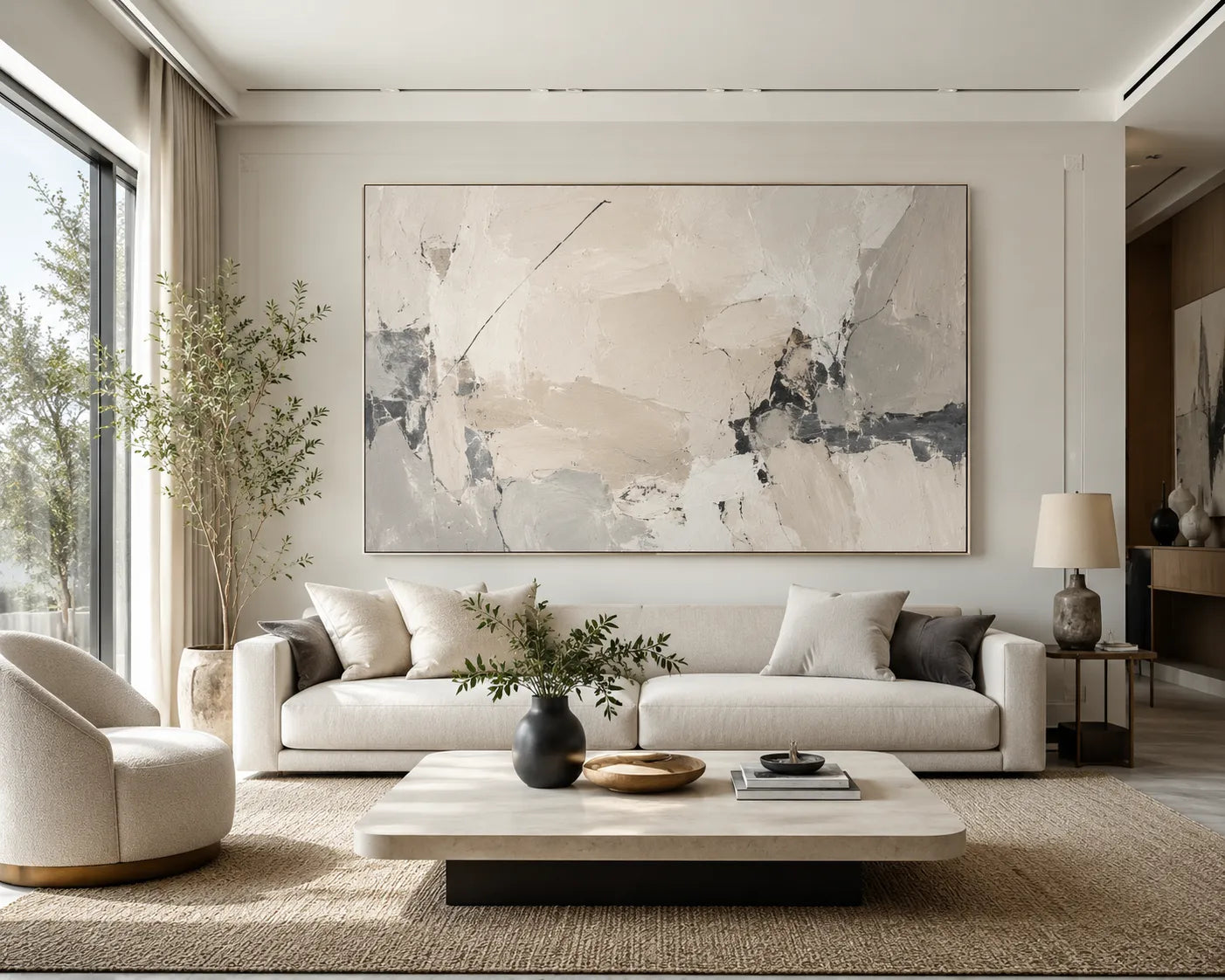
Before diving into spatial dynamics, it's essential to define the term. Minimalist textured wall art is a category of decor that relies on three core principles: a restrained, often monochromatic or neutral color palette; a focus on physical surface texture (impasto, plaster, carved relief) rather than complex imagery; and clean, uncluttered composition.
Unlike a busy landscape print or a gallery wall of mismatched frames, this type of art communicates through subtlety. The "minimalist" aspect comes from the absence of visual noise—often just white, beige, black, or earthy tones—while the "textured" aspect comes from the physical buildup of materials like oil paint, modeling paste, or natural plaster. This combination results in neutral textured decor that feels both contemporary and timeless.
How Is Texture Created in Minimalist Wall Art?

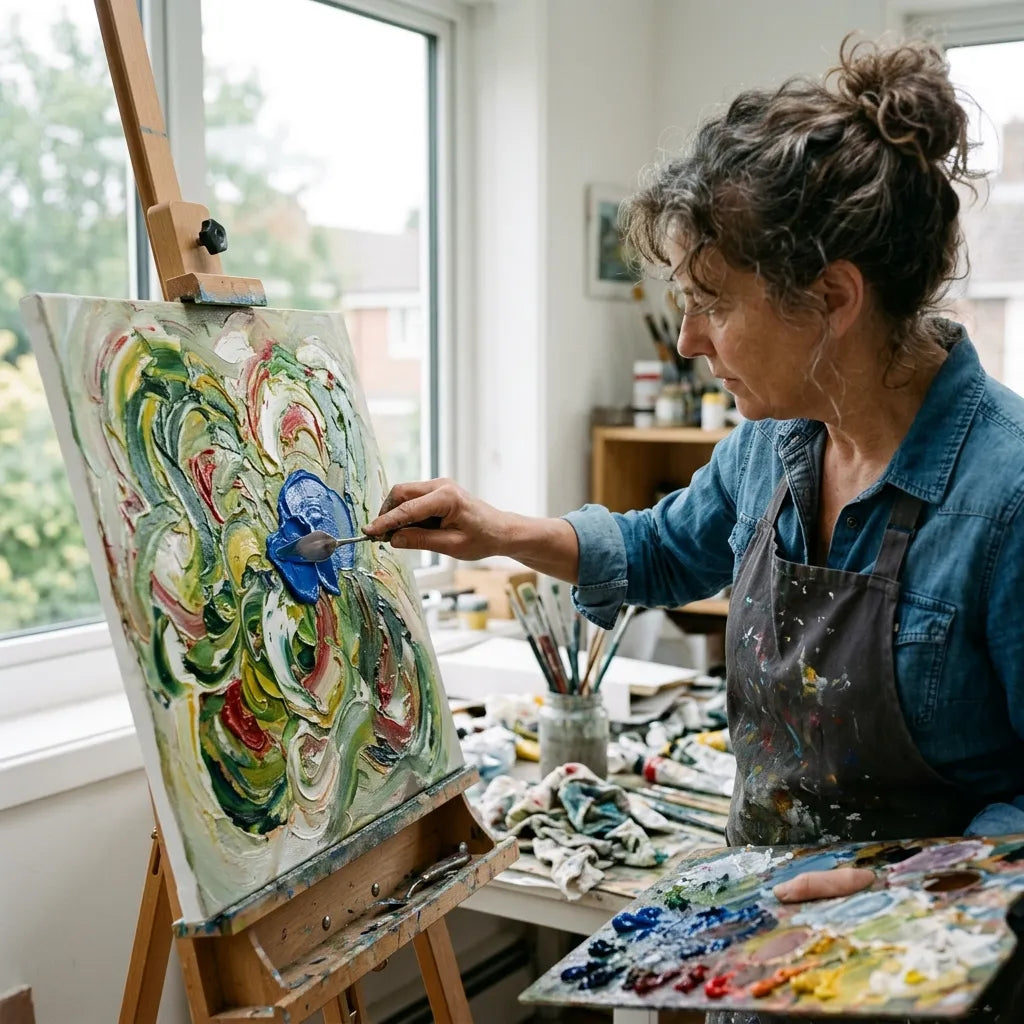
Understanding the craftsmanship behind these pieces helps explain their visual weight. Artists typically employ several techniques to achieve texture while maintaining minimalism:
-
Palette Knife Layering: Thick strokes of oil or acrylic medium are applied in sweeping gestures. The ridges catch light and cast soft shadows.
-
Plaster and Joint Compound: Water-based plasters are troweled onto canvas or wood panel, then carved or sanded smooth for an organic, stone-like finish.
-
Subtle Impasto: A thin base layer is topped with raised, repetitive patterns—circles, vertical lines, or waves—that add rhythm without complexity.
These methods create a small space wall art solution that is visually engaging up close but reads as a serene, cohesive element from across the room.
H2: Is Textured Wall Art Actually Suitable for Small Rooms?
A common misconception is that heavy texture or 3D elements will overwhelm a tiny room. In reality, the opposite is often true when executed with restraint. Here's why minimalist textured wall art thrives in compact spaces:
-
It Replaces Clutter with Focus: Small rooms suffer most from visual fragmentation. A single piece of sculptural canvas art acts as an anchor, drawing the eye to one intentional focal point instead of scattering attention across tchotchkes and shelves.
-
It Creates Perceived Depth: A flat, glossy print reminds the eye that the wall is a hard boundary. A textured surface with shadows and highlights creates a subtle sense of depth, making the wall feel slightly recessed or breathing—an optical trick that makes the room feel larger.
-
It Eliminates the Need for a Gallery Wall: Hanging multiple small frames on a tiny wall can look chaotic. One substantial minimalist textured wall art piece provides the same level of interest as five small prints but with a cleaner, more expansive look.
What Colors and Textures Work Best in Small Spaces?

Not all textures are created equal for tight quarters. The key is selecting finishes that reflect light appropriately and hues that recede rather than advance.
| Texture Type | Effect on Small Space | Recommended Room |
|---|---|---|
| Smooth Plaster / Matte White | Maximizes light reflection; makes walls feel airy and open. | Dark hallways, windowless bathrooms. |
| Vertical Ribbed Lines | Draws the eye upward, emphasizing ceiling height. | Rooms with low ceilings or narrow footprint. |
| Soft, Organic Waves | Adds gentle movement without harsh angles; very calming. | Bedrooms, meditation corners, home offices. |
| High-Contrast Black on White | Creates a bold, modern focal point. Use sparingly on a single accent wall only. | Entryways, powder rooms. |
Design Tip from the Experts: According to guidance from Architectural Digest, in small rooms, it's best to avoid high-gloss varnishes on textured art. The glare can highlight the room's boundaries. Instead, opt for a matte finish textured painting which absorbs and diffuses light softly.
How to Choose the Right Size for Minimalist Wall Art in Small Spaces?

Scale is the single most critical factor when placing small space wall art. The fear of going "too big" often leads homeowners to choose pieces that are too small, which ironically makes the wall and the room feel tinier and more disjointed.
Follow this simple sizing formula for modern apartment decor:
-
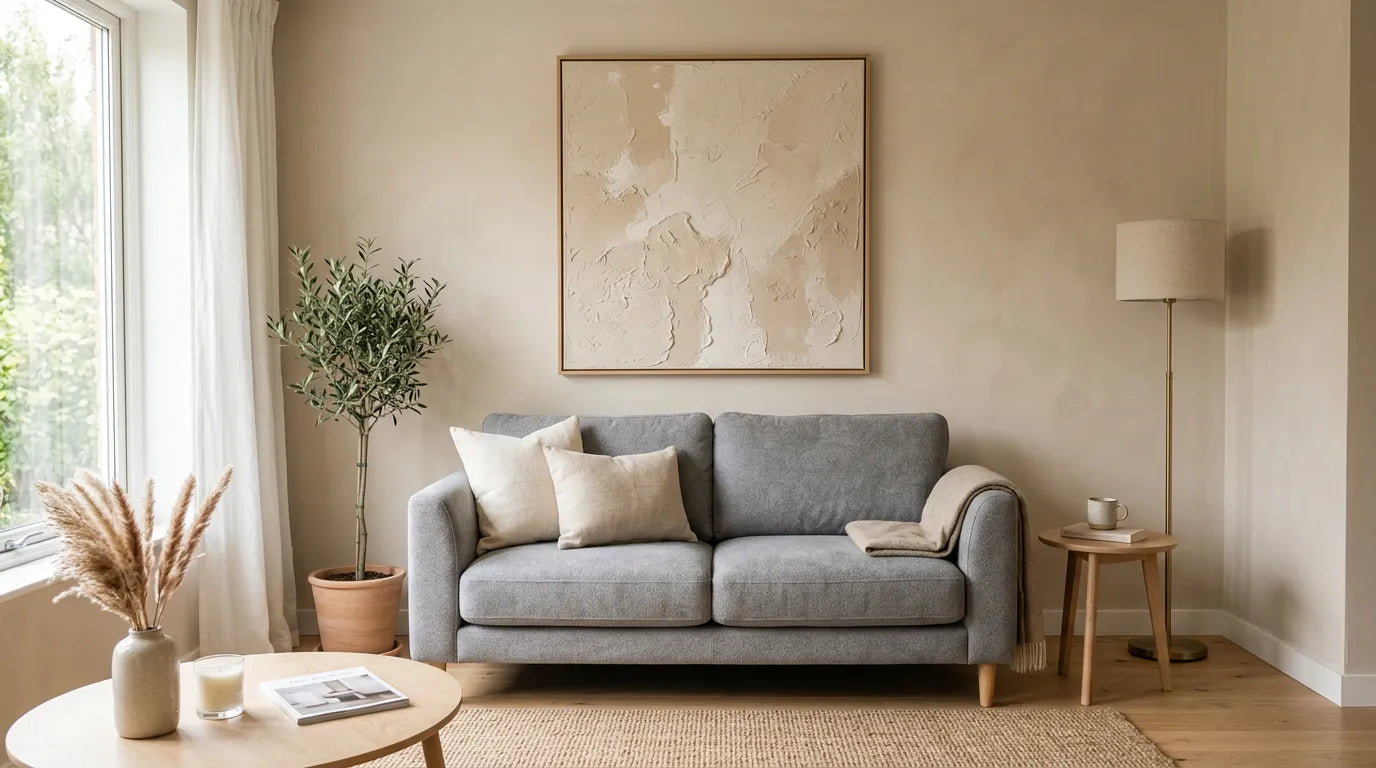
Above a Sofa or Bed: The width of the minimalist textured wall art should be approximately 60% to 75% of the width of the furniture piece below it. For a small apartment loveseat (150cm wide), aim for a painting around 90cm to 110cm wide.
-
On a Blank Accent Wall: Measure the available wall space (excluding trim and outlets). The art should cover roughly 50% to 65% of that visible wall area.
-
Hallways: Opt for a vertical orientation piece. The height should be about 50% of the wall height, placed at eye level.
For curated options sized specifically for condos and apartments, browse the apartment size art collection at Ink & Ich (https://www.inkich.com/collections/small-spaces).
H3: Where Should Minimalist Textured Wall Art Be Hung in a Small Room?
Placement can dramatically alter the perception of space. Here are the best strategies for three common small-space dilemmas:
-
Low Ceilings: Hang a vertical line textured canvas slightly higher than the standard 145cm center point. This tricks the eye into scanning upward, elongating the wall.
-
Narrow, Long Rooms: Place a landscape-oriented textured piece on the far short wall. The horizontal lines will help visually widen the room's proportions.
-
Awkward Nooks: Instead of leaving that weird 60cm wall by the door empty, use a small square neutral textured decor piece. It turns dead space into an intentional design moment.
Frequently Asked Questions (FAQ)
Q: Will a white textured painting just blend into my white wall and disappear?
A: This is a common concern, but it's the interplay of texture that prevents this. A matte white wall is flat. A white minimalist textured wall art piece has peaks and valleys. When light hits it from a window or lamp, the raised texture casts micro-shadows against the wall. This creates subtle contrast and ensures the art stands out as a distinct layer rather than blending in.
Q: I rent my apartment and can't drill large holes. Are textured paintings heavy?
A: The weight depends on the substrate. Canvas stretched over a wooden frame (gallery-wrapped) is relatively lightweight compared to framed art with glass. Many minimalist textured wall art pieces can be hung with heavy-duty adhesive hooks (like 3M Claw) if the canvas is under a certain size. Always check the product weight on sites like Ink & Ich (https://www.inkich.com/) before choosing hanging hardware.
Q: Is minimalist art boring?
A: Minimalist doesn't mean empty; it means intentional. A piece of sculptural canvas art with heavy plaster work offers a tactile, almost meditative quality that a busy, colorful print cannot. It invites you to slow down and appreciate the nuance of light and shadow. It's the opposite of boring—it's a quiet statement.
Q: Can I mix minimalist textured art with other styles?
A: Absolutely. This is one of the strengths of neutral textured decor. It acts as a visual palate cleanser. You can pair a rough, organic plaster canvas with sleek mid-century modern furniture, or with a cozy, maximalist bohemian rug. The art grounds the space without competing.
Q: How do I clean dust off textured canvas in a small dusty apartment?
A: For modern minimalist wall hanging pieces with deep texture, avoid wet cloths or feather dusters that snag. The best method is using a hairdryer on the cool setting held at a distance, or a can of compressed air for electronics. This blows the dust out of the crevices without touching the delicate plaster or oil surface.
Conclusion: Elevate Every Square Inch
The beauty of minimalist textured wall art lies in its ability to transform a space without demanding anything in return. It doesn't require you to rearrange your furniture, repaint your walls, or sacrifice precious floor space. By leveraging shadow, form, and neutral restraint, it proves that small rooms can hold big, beautiful ideas. Ready to find the perfect piece for your compact sanctuary? Explore the thoughtfully curated collection of small space wall art at inkich (https://www.inkich.com/) and give your walls the texture they deserve.