How to Choose the Right Canvas Art for Any Room

How to Choose the Right Canvas Art for Any Room
Wall art is the fastest way to give your home a soul. But when it comes to different rooms – living room, bedroom, dining room, hallway – do you really know what kind of canvas art to choose? What size? What colors? Abstract or realistic? This article provides a room-by-room art guide to help you make the right choice, from core principles to specific examples.
Why Do Different Rooms Need Different Canvas Art?
Every room has a different function and emotional need. The living room should feel open and inviting; the bedroom should be restful and quiet; the dining room should stimulate appetite; the hallway should avoid feeling cramped. Choosing the right canvas art means matching the artwork’s emotional tone with the room’s purpose. A bold abstract that looks great in the living room may feel too stimulating in the bedroom, while a soft landscape in the bedroom may look insignificant in the living room. Understanding this is your first step toward picking the perfect art.
Living Room: How to Choose Canvas Art That Commands the Space

Size Rule: Go Big or Go Home (Single or Multi-Panel)
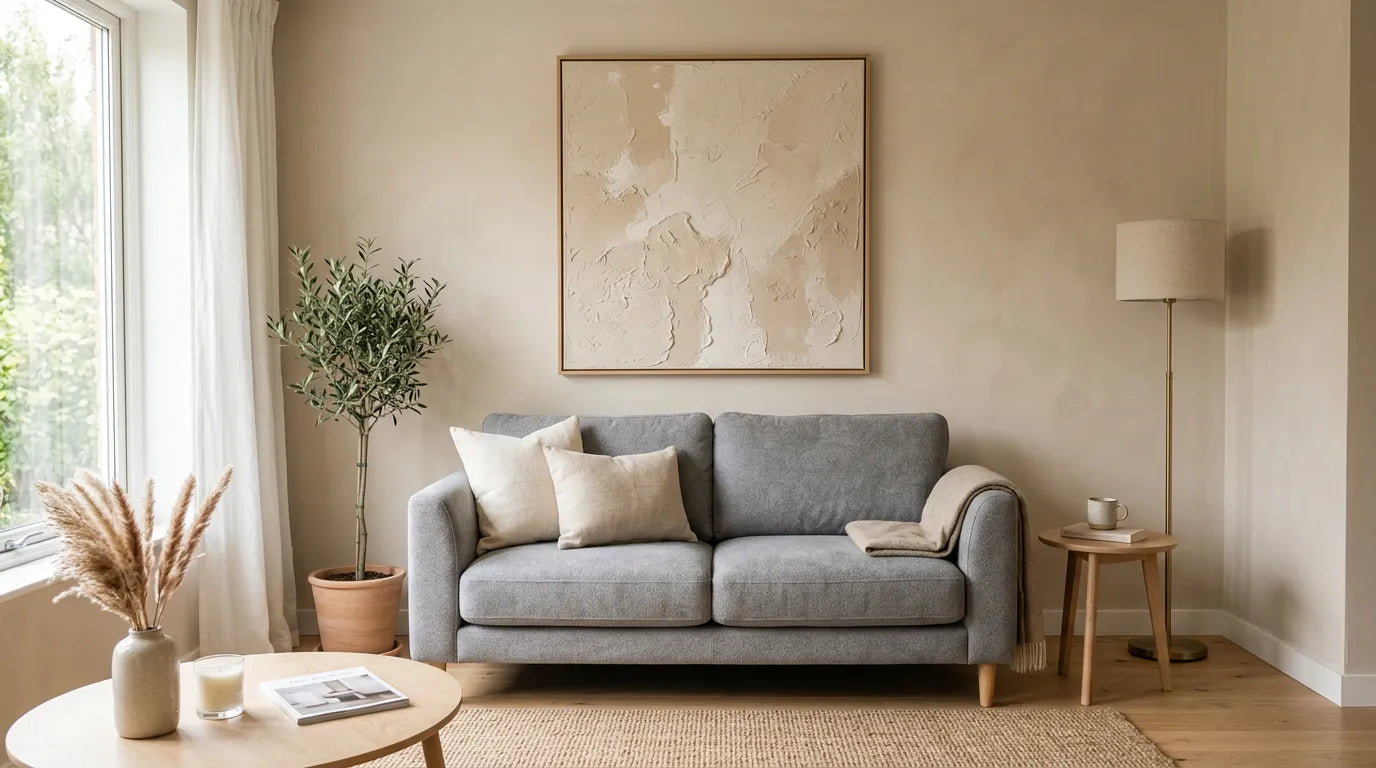
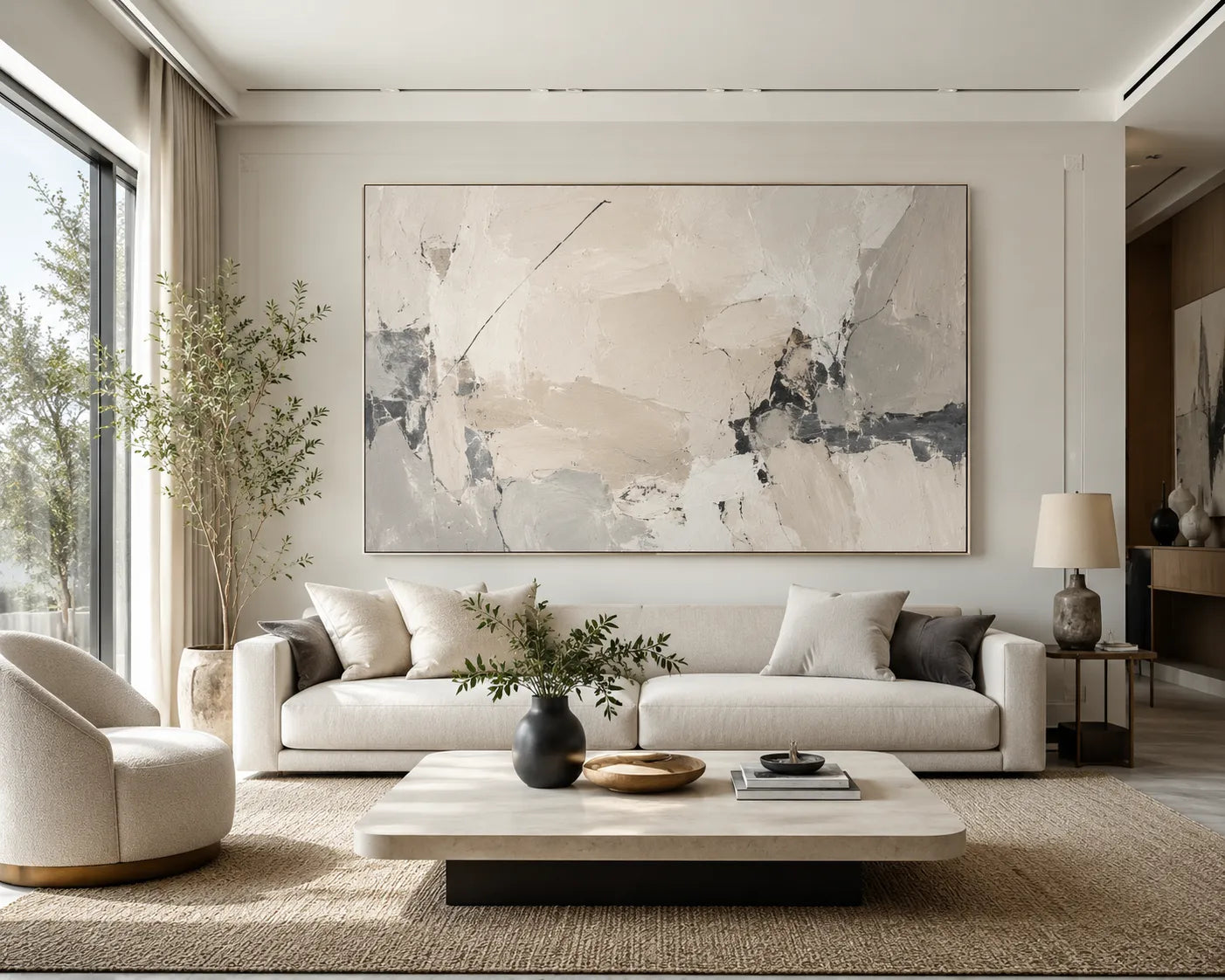
The living room is usually the largest shared space, and the sofa wall is the prime spot for art. Living room wall art should ideally be 2/3 to 3/4 the length of your sofa. For a 2‑meter (6.5‑ft) sofa, choose art that is 1.3–1.5 meters wide. A single large canvas creates the strongest presence. You can also use diptychs or triptychs, but make sure the total width follows the same rule.
Color Strategy: Match Your Soft Furnishings or Create a Focal Point
-
Matching method: Pick one or two dominant colors from your sofa, cushions, or rug and use them as the main hues in the artwork. This creates a harmonious look.
-
Focal‑point method: In a black‑and‑white minimalist space, use a small area of high‑saturation color (e.g., a touch of orange or cobalt blue) to draw the eye.
Style Suggestions
-
Modern minimalist → abstract, geometric, large color fields
-
Nordic / Scandinavian → fresh botanicals, line drawings, low‑saturation landscapes
-
Industrial → black‑and‑white photography, graffiti style, rough textures
-
Wabi Sabi / Japanese → textured abstract, earth tones, hand-painted oil painting
Internal link recommendation: Explore hand-painted oil paintings perfect for your living room at https://www.inkich.com/collections/all-paintings . Each piece can be customized to match your sofa color.
Bedroom: How to Choose Canvas Art That Promotes Relaxation
Color Palette: Low Saturation, Soft and Calm
The bedroom is for rest. Highly saturated or high‑contrast art can overstimulate the brain. Bedroom canvas art should use low‑saturation blues, greys, off‑whites, soft pinks, or sage greens. Avoid large areas of red, orange, or vivid purple.
Subject Matter: Avoid Complexity and Dynamic Action
For representational art, choose quiet landscapes, soft watercolors, gentle botanicals, or minimalist line drawings. Avoid crowds, sports scenes, wild animals, or anything with intense action. Even abstract pieces should favor flowing, rounded shapes over sharp, aggressive geometry.
Placement and Height
-
Above the headboard: The bottom of the art should be 15–30 cm above the headboard. The width should not exceed the headboard width.
-
Side wall: You can arrange two or three small pieces in a staggered grouping, but don’t use more than three – keep it calm.
Dining Room: How to Use Canvas Art to Boost Appetite

Theme: Food, Nature, Warm Tones
Dining room wall art should revolve around “pleasure” and “appetite.” Still lifes (fruit, flowers, tableware), pastoral landscapes, and warm‑toned abstracts work beautifully. Yellow, orange, and warm red can stimulate appetite; green suggests freshness.
Size and Layout
-
Rectangular dining table: Hang a horizontal canvas on the wall behind the table. Its width should be about 1/2 to 2/3 of the table length.
-
Round dining table: Use a round or square canvas on the corresponding wall to maintain balance.
What to Avoid
Overly cool blue‑green palettes, gloomy or scary subjects, and complex narrative scenes that distract from conversation.
Hallway / Entryway: How to Make a Small Space Feel Artistic

Size: Not Too Large, But Eye‑Catching
Hallways are usually narrow. An oversized canvas will feel oppressive. A small piece 40–60 cm wide is often enough. However, if the hallway ends in a full wall, you can use a slightly larger canvas as an “end view” focal point.
Arrangement: Gallery Wall
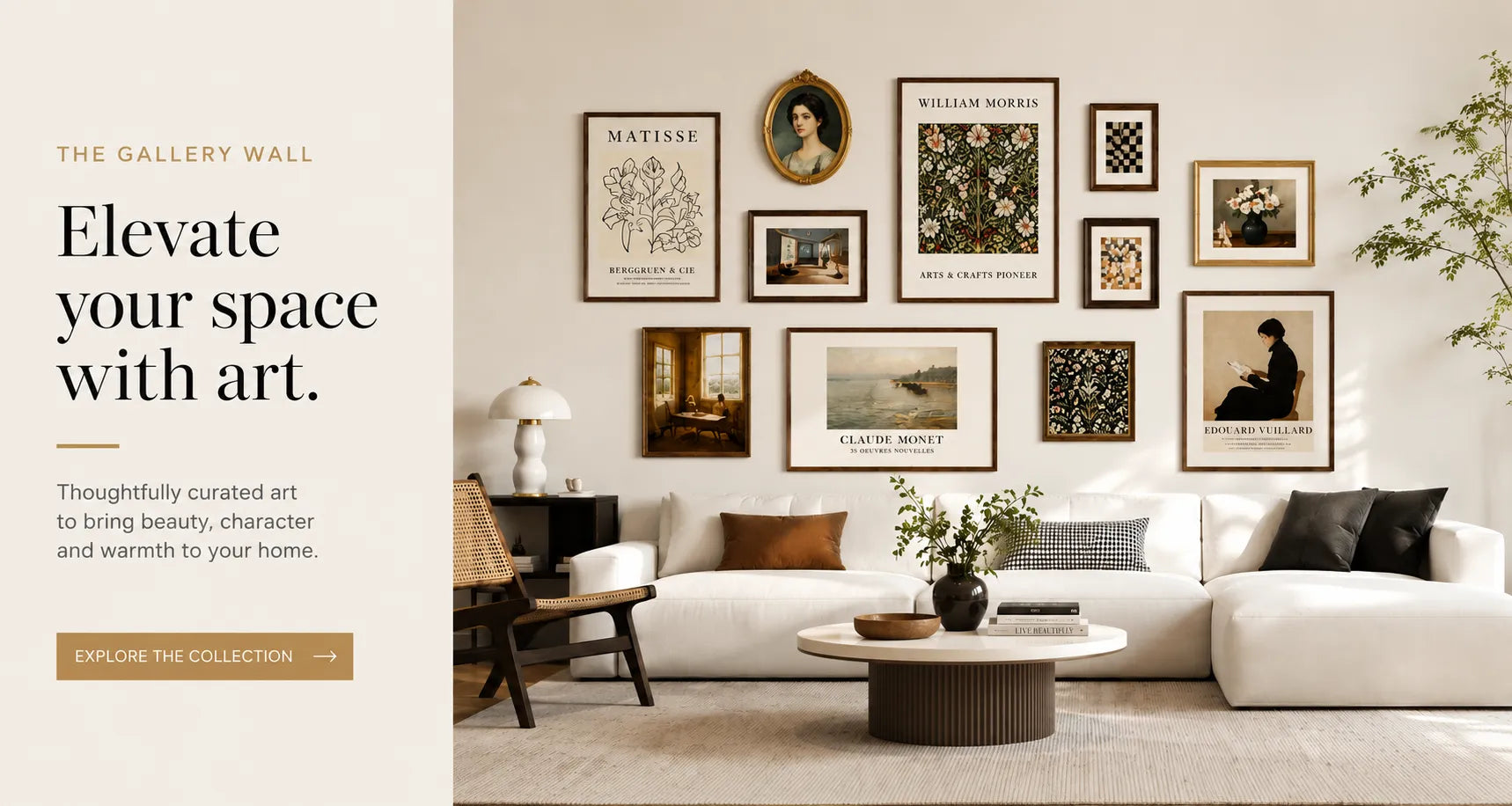
Hallways are perfect for a gallery wall – a line of several canvases of different sizes, spaced evenly (8–15 cm apart). Keep the frame style consistent (e.g., all black slim frames or all raw wood), and the subject matter can be mixed but not chaotic.
Lighting
Hallways often have poor natural light. Use picture lights or track lighting to highlight the art. Hand-painted oil painting with texture looks especially good under side lighting, adding depth to a narrow space.
Kitchen and Bathroom: Can You Hang Canvas Art? What to Watch For
Yes, but with special considerations.
| Space | Risks | Suitable Art Types | Not Recommended |
|---|---|---|---|
| Kitchen | Grease, humidity, temperature changes | Sealed prints, acrylic paintings (easy to clean), glass‑framed art | Unprotected hand-painted oil painting (absorbs grease) |
| Bathroom | High humidity, water splashes | Waterproof canvas, ceramic art, metal art, resin‑coated prints | Any untreated oil painting or watercolor |
Tip: If you really want an original oil painting in the kitchen or bathroom, make sure it has a professional waterproof varnish and keep it away from direct water contact.
Size and Height: Is There a Golden Rule for Hanging?

Eye‑Level Center Rule
The core rule for canvas size guide and placement: the center of the artwork should be 145–155 cm (57–61 inches) from the floor – roughly average eye level. This works for most rooms. When hanging above furniture (sofa, bed, table), you can lower it slightly based on visual balance with the furniture.
Quick Height Reference Table
| Location | Distance from furniture top to bottom of art | Example |
|---|---|---|
| Above sofa | 15–25 cm | Sofa height 80cm → art bottom at 95–105cm from floor |
| Above headboard | 15–30 cm | Headboard height 60cm → art bottom at 75–90cm from floor |
| Above dining table | 20–30 cm | Table height 75cm → art bottom at 95–105cm from floor |
| Hallway (no furniture) | Center at 145–155cm | Hang directly at eye level |
Abstract or Representational? How to Choose Based on Personality and Room Mood
Abstract Art
-
Best for: People who like to think, want a unique look, modern interiors
-
Mood: Evokes imagination, not tied to literal objects
-
Styling tip: Give abstract art plenty of breathing room – don’t surround it with many other decorative pieces.
Representational Art (landscapes, portraits, still lifes, etc.)
-
Best for: Those who prefer narrative, warmth, traditional or country style
-
Mood: Clear, familiar, grounding
-
Styling tip: Match the subject to the room – calming landscapes for the bedroom, reading scenes for a study.
Mixing both: You can mix abstract and representational art in one room, but let one dominate and use the other as accents. For example, a large abstract canvas on the main wall and a small still life on a sideboard.
How to Choose a Frame? Framed vs. Frameless?
| Frame Type | Visual Effect | Best For | Notes |
|---|---|---|---|
| Frameless (gallery wrap) | Clean, modern, image extends to edges | Modern minimal, Nordic, industrial | Canvas sides must be painted or finished; thickness at least 2cm |
| Slim black frame | Refined, defines the edge | Minimalist, mid‑century modern, photography | Works with colorful art – frame doesn’t compete |
| Raw wood frame | Warm, natural | Wabi Sabi, Japanese, farmhouse | Wood grain should harmonize with art tones |
| Metallic frame (silver/gold) | Elegant, formal | Traditional, neoclassical, luxury | Best for portraits, classic landscapes |
| Floating frame (no outer frame but liner) | Layered but not bulky | Contemporary art, abstract expressionism | Liner usually white or black |
Hanging art tips: Within one room, keep frame styles consistent (at least on the same wall). Mixing different colors and materials of frames requires advanced design skill.
Frequently Asked Questions (FAQ)
How do I know if a canvas art piece will fit my room?
Use painter’s tape to outline the art dimensions on the wall, or use an AR app like IKEA Place or Artfully. Observe for a few days under different lighting to see if it feels right.
Do I have to buy original hand‑painted oil paintings? Are prints okay?
Both are fine. Hand-painted oil painting has unique brushwork and three‑dimensional texture – each piece is one of a kind, with higher artistic and collectible value. High‑quality prints are affordable and good for tight budgets or if you like to change art often. If you value texture and uniqueness, original hand‑painted art is the way to go.
How high should I hang canvas art?
In most cases, the center of the artwork should be 145–155 cm from the floor. When hanging above furniture, refer to the height table above.
Can I mix different art styles in one room?
Yes, but limit to 2–3 styles and unify them with a consistent frame color or a connecting theme. For example, abstract + black‑and‑white photography + botanical watercolors can all work with slim black frames.
Where can I buy original canvas art for different rooms?
Visit https://www.inkich.com/ – you can filter by room (living room, bedroom, dining room, hallway) to find specifically matched hand-painted oil paintings. Each piece supports size and color customization.
Conclusion: Canvas Art Is the Emotional Switch of Your Home
Choosing the right canvas art for different rooms doesn’t require you to be an art expert. Just remember: living room needs presence, bedroom needs peace, dining room needs warmth, hallway needs rhythm. Use size to control proportion, color to match mood, and frames to unify style. Finally, trust your instinct – the piece that makes you stop and look every day is the right one.