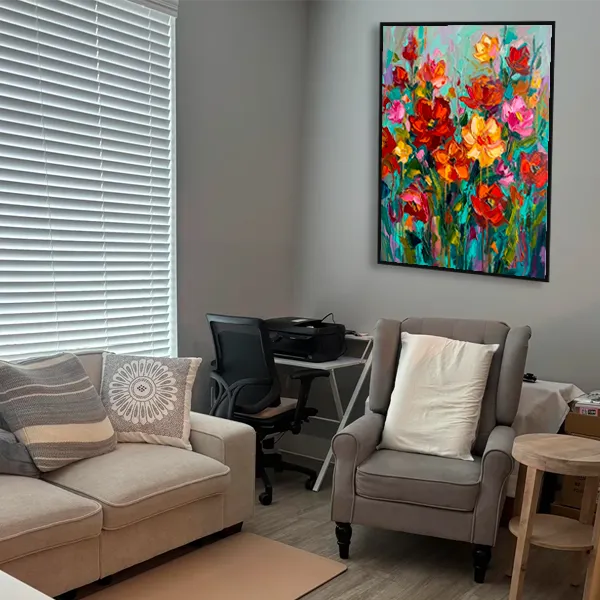
Hand-Painted Oil Painting on Canvas: What Makes It Worth the Investment?

Whether you’re decorating a new home or looking for a meaningful piece of art, you may wonder: is a hand-painted oil painting on canvas truly worth the higher price tag? The answer lies in its uniqueness, craftsmanship, and the emotional—and sometimes financial—value it brings over time.
What Defines a Hand-Painted Oil Painting on Canvas?
A hand-painted oil painting on canvas is exactly what it sounds like: an original work of art created by an artist using oil paints on a canvas surface. Unlike mass-produced prints, each piece is made by hand, often in a single session or over several days, and carries the artist’s unique brushstrokes, texture, and creative decisions.
Key characteristics include:
-
Visible brushstrokes and paint layers that create depth
-
Texture that changes with light and viewing angle
-
Original composition — no two are identical
-
Artist’s signature, often on the front or back of the canvas
These elements make hand-painted canvases fundamentally different from anything produced by a machine.
Hand-Painted vs. Printed Art: What Are the Real Differences?
To understand the investment value, it helps to compare hand-painted originals with common alternatives like giclée prints or posters.
| Feature | Hand-Painted Oil Painting | Giclée / Fine Art Print | Poster / Mass-Produced Print |
|---|---|---|---|
| Uniqueness | One-of-a-kind original | Limited or open edition, multiple copies | Identical copies in large quantities |
| Texture | Raised brushstrokes, tactile surface | Flat, often textured paper or canvas coating | Flat, no texture |
| Longevity | Can last centuries with proper care | 50–100 years under ideal conditions | Fades quickly, especially in sunlight |
| Artist Involvement | Direct creation by artist | Artist may sign or approve reproduction | No artist involvement |
| Value Over Time | May appreciate if artist gains recognition | Generally depreciates | Little to no resale value |
| Emotional Connection | High — you own the actual creation process | Moderate — you own a reproduction | Low — decoration only |
For many collectors, the combination of uniqueness, texture, and potential appreciation makes the hand-painted canvas a clear choice.
https://www.inkich.com/collections/flower-tree

How to Identify a Genuine Hand-Painted Canvas
If you’re buying online or in a gallery, it’s important to know what to look for to ensure you’re getting an original.
Signs of a genuine hand-painted oil painting:
-
Brushstroke texture: Run your fingers gently (if possible) or look for visible peaks and valleys in the paint.
-
Back of the canvas: Original paintings often show paint seepage, canvas weave, and sometimes the artist’s signature or notes.
-
Inconsistent edges: Hand-painted edges may have slight drips or uneven paint, unlike machine-cut prints.
-
Artist’s signature: Look for a signature on the front or back; legitimate originals are almost always signed.
Tip: Reputable sellers like inkich provide artist biographies and creation stories, which add authenticity and traceability.
Is Original Art a Good Investment for Your Home?
When people ask whether a hand-painted oil painting on canvas is a good investment, they often mean two things: financial return and personal value.
1. Financial Value
Not all original art appreciates, but certain factors increase the likelihood:
-
Artist trajectory: Emerging artists whose work gains recognition may see value increase over time.
-
Provenance: Clear documentation of artist authenticity and purchase history adds value.
-
Rarity: One-of-a-kind works are inherently more valuable than reproductions.
Even if financial appreciation is not guaranteed, original art often holds its value better than decorative prints.
2. Personal Value
For most homeowners, the true investment lies in:
-
Daily enjoyment: A piece you love brings lasting emotional return.
-
Conversation starter: Original art invites stories and connections.
-
Heirloom potential: Hand-painted canvases can be passed down as family treasures.
“Art is not an investment in the financial sense for most people; it’s an investment in your life, your space, and your joy.”
What to Look for When Buying a Hand-Painted Oil Painting
If you’re ready to invest, keep these criteria in mind to choose a piece that fits your space and taste.
-
Artist background: Look for artists with a clear style, training, or an interesting story. Understanding the artist adds depth to the piece.
-
Canvas quality: Stretched linen or high-quality cotton with a solid frame ensures longevity.
-
Size and proportion: Measure your wall. A common rule is that art should cover 60–75% of the available wall space above furniture.
-
Color palette: Consider your existing decor. Neutral tones (beige, cream, ash) blend easily, while bold colors make a statement.
-
Lighting: Think about where the painting will hang. Natural light enhances texture, but UV exposure can fade pigments over time.
For a wider selection, you can explore collections like neutral abstract paintings or large-scale works from emerging artists.

Frequently Asked Questions About Hand-Painted Oil Paintings
1. Is hand-painted oil painting worth more than a print?
Yes, generally. A hand-painted original is unique, involves significant labor and skill, and offers texture and depth that prints cannot replicate. Over time, originals may also appreciate in value, whereas prints typically do not.
2. How can I tell if an oil painting is hand-painted?
Look for visible brushstrokes and texture on the surface. Check the back of the canvas for signs of paint seepage, canvas weave, and an artist’s signature. If you’re buying online, a trustworthy seller will provide detailed images and artist information.
3. What affects the quality of a hand-painted canvas?
Key factors include the type of canvas (linen is generally more durable than cotton), the quality of oil paints, the artist’s technique, and whether the canvas is properly stretched and framed.
4. Does original art hold its value over time?
It can, especially if the artist gains recognition. However, even if the resale value doesn’t increase, original art holds personal and decorative value that printed reproductions cannot match.
5. What size hand-painted painting should I buy for my living room?
A common guideline is to choose artwork that spans 60–75% of the width of the furniture below it (e.g., a sofa). For a typical 3-seat sofa (around 80 inches wide), a painting 48–60 inches wide works well. Also consider the height: art should be hung so the center is at eye level (about 57–60 inches from the floor).
Bring Home a Hand-Painted Original
Choosing a hand-painted oil painting on canvas is about more than decorating a wall. It’s about owning a piece of an artist’s journey, adding texture and life to your home, and investing in something that is truly yours alone. Whether you’re drawn to the earthy tones of a landscape or the bold strokes of an abstract, an original painting offers a level of authenticity that prints simply cannot deliver.
Explore our artist collection to find a piece that speaks to you—each one painted by hand, made to last, and ready to become a part of your story.