What Is Wabi-Sabi Art? A Complete Guide to the Minimalist Aesthetic Taking Over Modern Homes
Wabi-sabi is more than an interior style — it is a philosophy. Rooted in Japanese aesthetics, wabi-sabi embraces imperfection, natural textures, and quiet simplicity. Today, this artistic movement has become a global trend, reshaping how people design their homes.

1. What Exactly Is Wabi-Sabi Art?
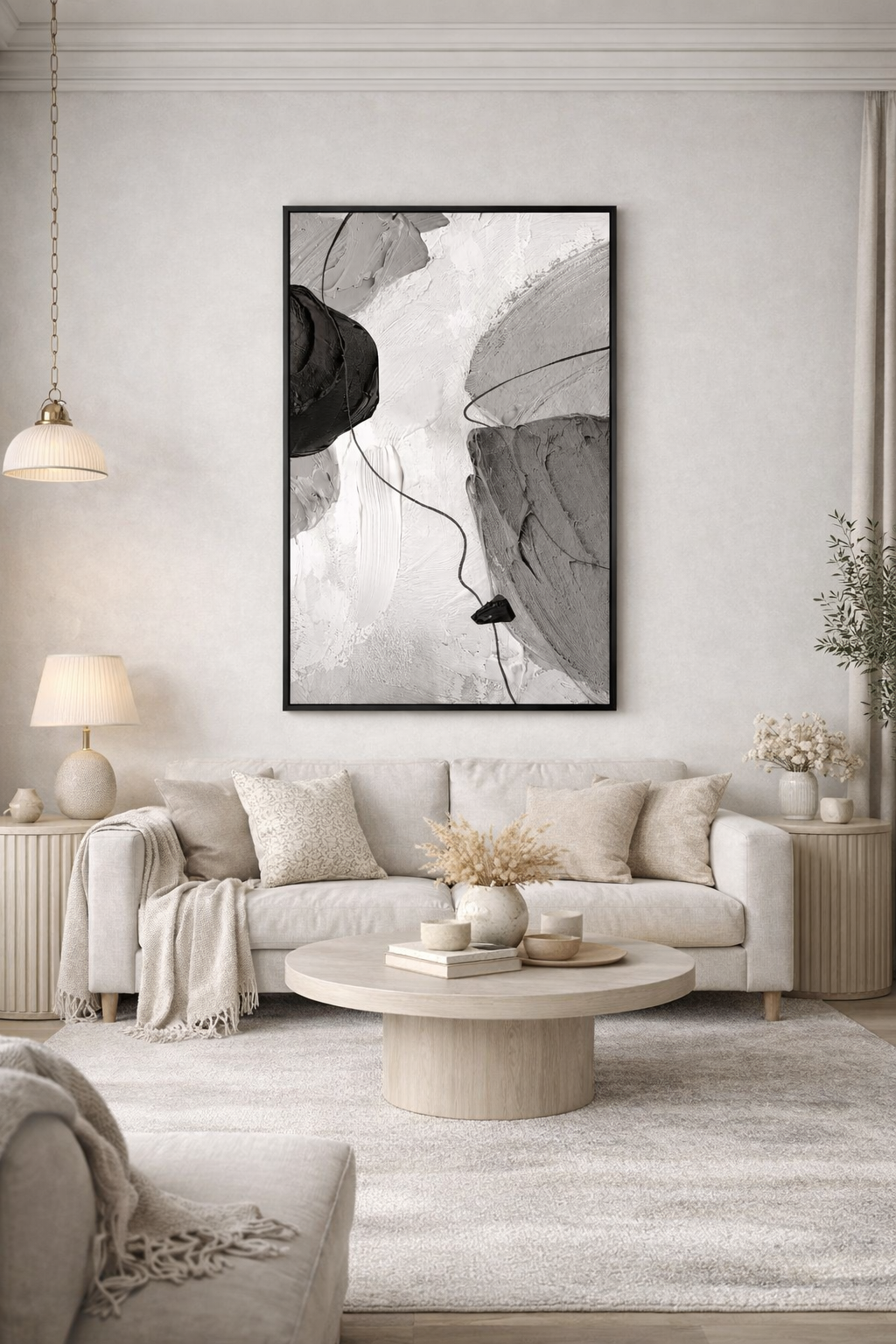
Wabi-sabi art celebrates authenticity. It highlights raw textures, natural tones, and imperfect forms — reminding us that beauty can be subtle, quiet, and organic.
Wabi-sabi pieces often feature:
• Earthy colors (beige, sand, taupe, soft grey)
• Minimal brushwork
• Organic shapes
• Matte, textured surfaces
• Simple, calming compositions
2. Why Wabi-Sabi Art Works in Modern Homes
Most contemporary homes favor clean lines and neutral palettes. Wabi-sabi art enhances that simplicity instead of overpowering it.
Benefits include:
✔ Creates a sense of calm
✔ Complements minimalist and Japandi interiors
✔ Adds subtle luxury through texture
✔ Makes a space feel grounded and warm
3. The Power of Texture
Hand-painted texture is the core of wabi-sabi. Raised surfaces, knife strokes, and grainy layers catch natural light beautifully and elevate even the simplest room.
Printed art cannot replicate this effect. Only handmade textures create that serene, meditative feeling.
4. How to Style Wabi-Sabi Art in Your Home
• Use large-scale pieces for entryways and living rooms
• Pair with linen, wood, and stone materials
• Keep the palette neutral
• Allow empty space around the artwork
5. Where to Buy Authentic Wabi-Sabi Wall Art
Inkich specializes in hand-painted, textured wabi-sabi artworks created by professional artists — each piece truly unique.