How to Choose the Right Painting Size for Your Living Room
 Choosing the right painting size for a living room is one of the most important decisions in home styling. Even a beautiful piece can look underwhelming if it is too small, while artwork that is too large may overpower the furniture and throw off the balance of the room. The goal is to make the painting feel intentional, integrated, and visually connected to the space around it.
A good starting point is to think about the wall and the furniture as one composition. If you are hanging art above a sofa, console, or sideboard, the painting should feel proportionate to the piece below it rather than floating independently on the wall. For broader placement guidance, readers often find helpful design references from Architectural Digest’s guide to hanging art and HGTV’s art display tips.
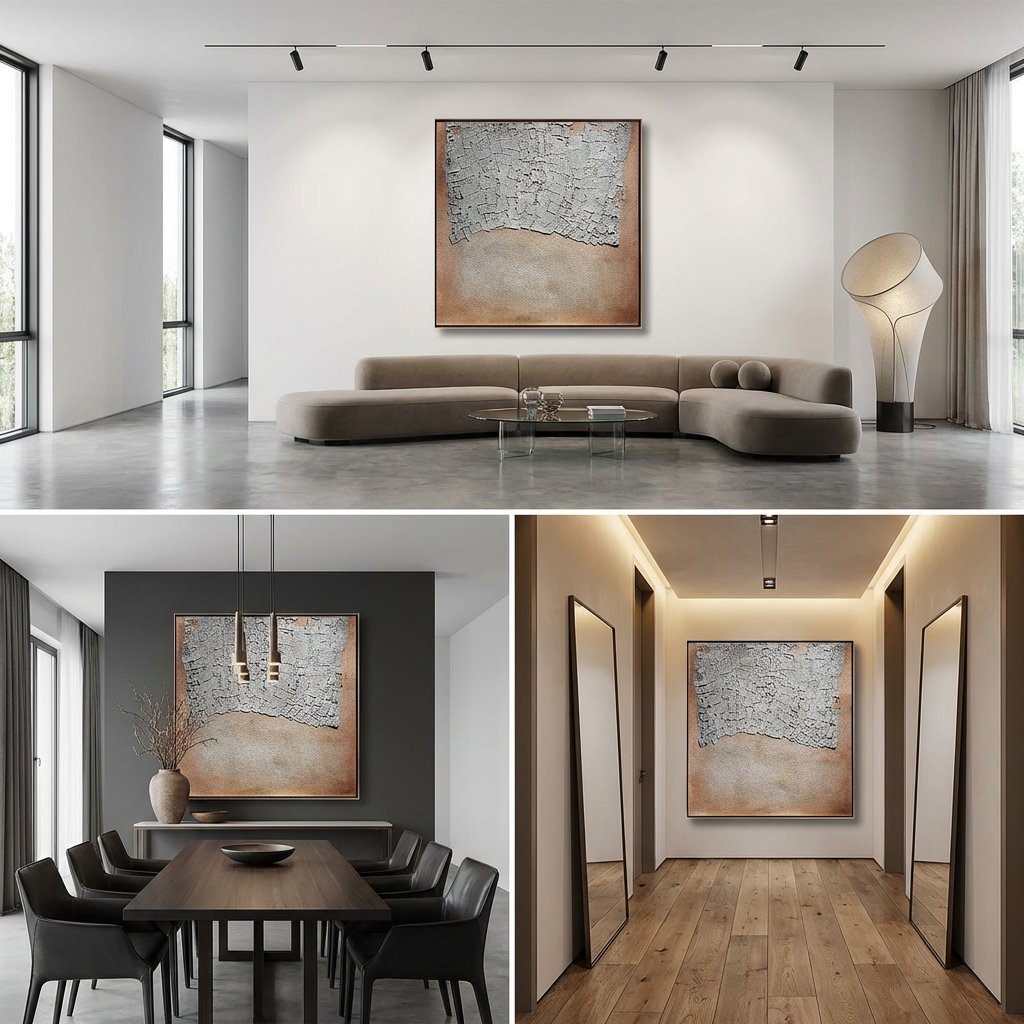
For larger living rooms, a wide horizontal piece is often the most effective option. It visually anchors the seating area and creates a stronger focal point. If your goal is a calm and sophisticated interior, consider a hand-painted neutral composition from our Abstract Art collection or a softer, more organic piece from our Wabi Sabi Art collection. Both styles work especially well in modern homes where the wall art should elevate the room without making it feel busy.
If your space is minimal or filled with natural tones like beige, ivory, taupe, and warm wood, texture becomes just as important as color. In these settings, a flat image may not create enough visual depth. A textured hand-painted piece can catch light throughout the day and add quiet richness to the room. That is why many homeowners choose works from our 3D Textured Art collection or our Minimalist collection when they want the room to feel more refined.
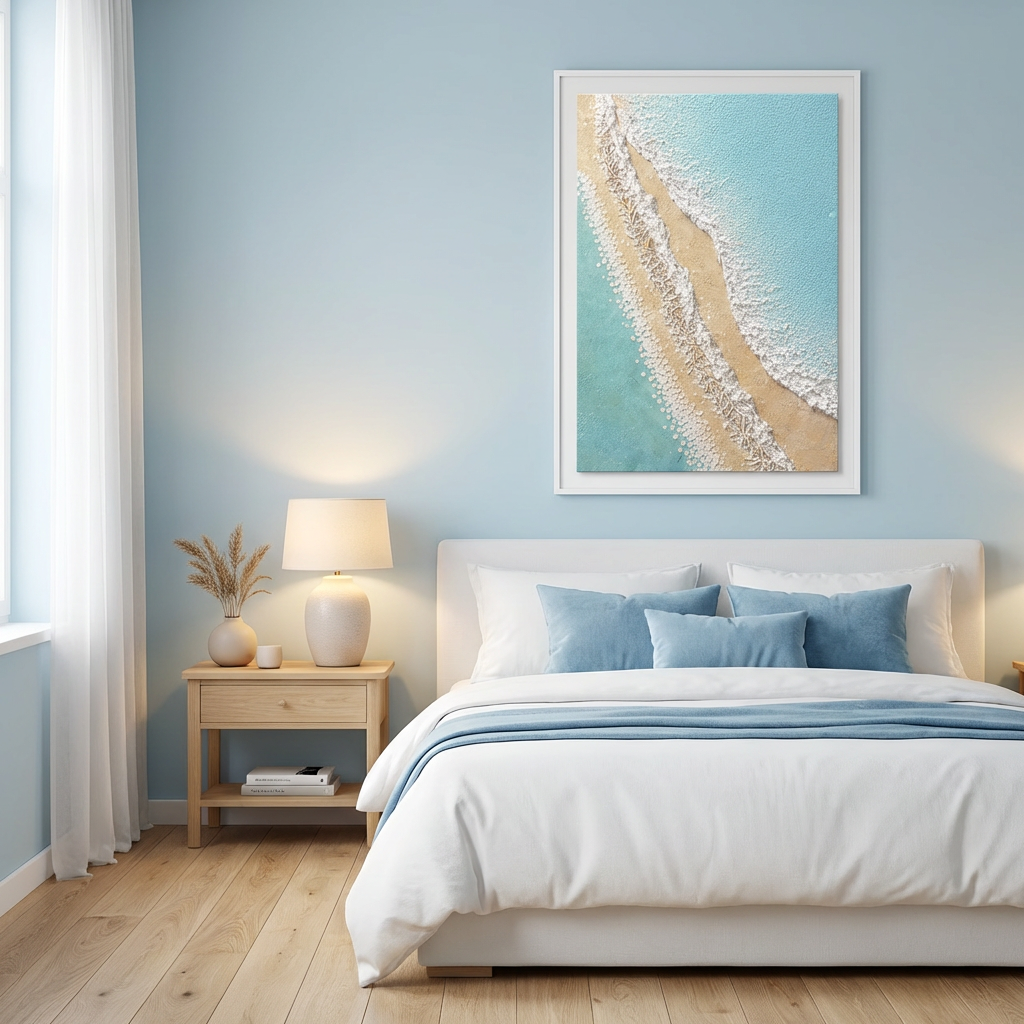
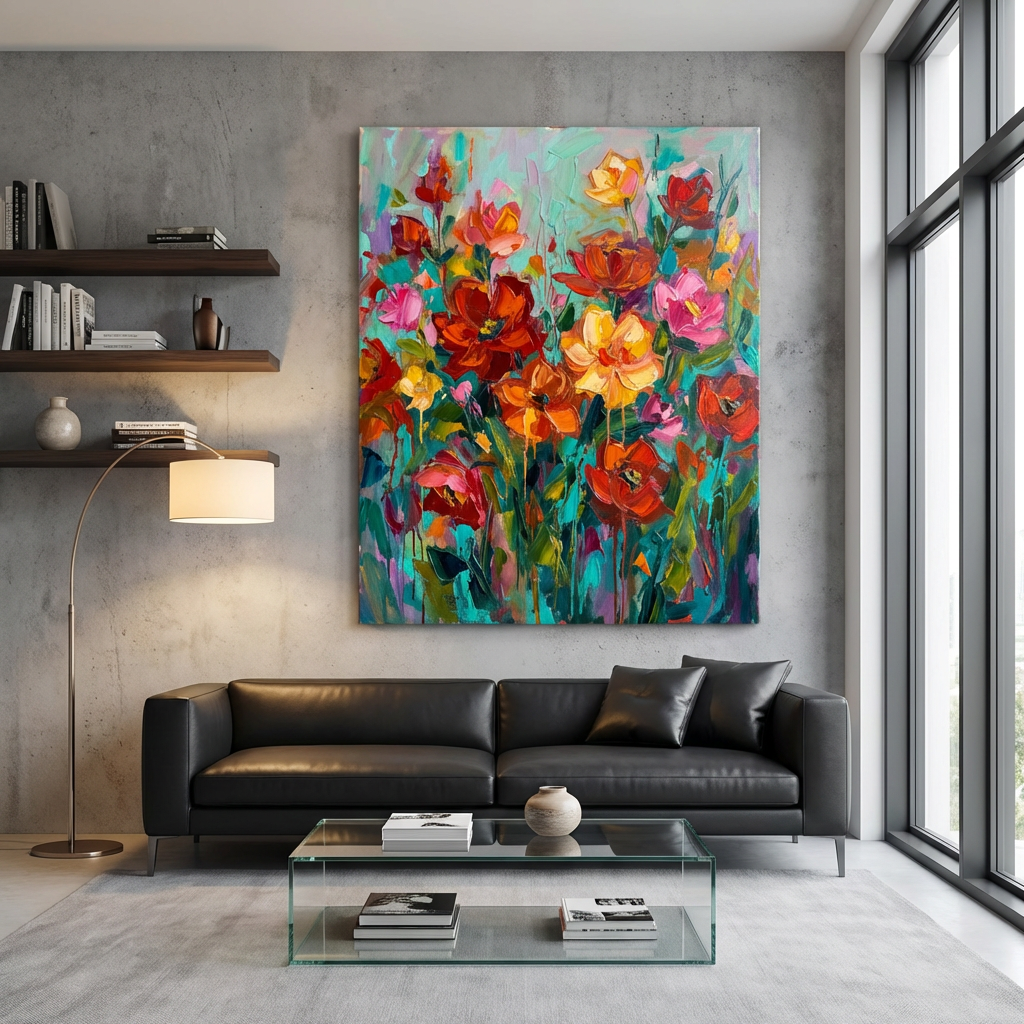
Another key decision is orientation. Horizontal paintings are usually best above sofas and long consoles, while vertical pieces are better for narrower walls, corners, or spaces between windows. If your wall is especially large, you may also want to consider a multi-panel arrangement or a more substantial statement piece. If you are still comparing options, our Best Sellers page is a practical place to start because it shows the styles many customers already gravitate toward.
When choosing scale, try to avoid the most common mistake: going too small. Small artwork often gets lost in a living room, especially when placed above large furniture. A painting should not feel like an afterthought. It should help define the atmosphere of the room, whether that feeling is serene, luxurious, artistic, or bold.
It is also worth thinking beyond measurements alone. Ask yourself what role the painting should play in the room. Do you want it to be the first thing people notice when they enter? Do you want it to soften a modern interior? Do you want it to make a neutral room feel more layered and complete? Once you answer those questions, the right size often becomes easier to identify.
If you are unsure which dimensions would work best for your wall, you can review our FQA page for common ordering questions or contact us directly through our Contact Us page. We can help you choose a better size, orientation, and style based on your room layout and overall aesthetic.