How to Choose Neutral Textured Wall Art for a Beige Minimalist Bedroom
A beige minimalist bedroom is the perfect example of calm, balanced design. Soft neutral tones create a relaxing atmosphere, but without the right artwork, the space can sometimes feel unfinished or too plain.
This is where neutral textured wall art becomes essential. Instead of relying on bold colors, textured artwork introduces dimension, warmth, and artistic depth—making your bedroom feel sophisticated while maintaining a minimalist aesthetic.
In this guide, we’ll show you how to choose the perfect neutral textured wall art for a beige minimalist bedroom, including design tips used by professional interior designers.
Why Neutral Textured Wall Art Works in Beige Minimalist Bedrooms
Minimalist bedrooms focus on simplicity, harmony, and natural tones. Neutral textured artwork complements this style because it adds visual interest without overwhelming the space.
According to interior design experts at
Architectural Digest, textured art pieces help introduce subtle contrast and depth in neutral interiors, preventing the room from looking flat.
Key benefits include:
-
Adds dimension and tactile interest
-
Maintains a soft and calming color palette
-
Complements natural materials like wood, linen, and stone
-
Creates a luxury gallery-style atmosphere
For example, a handcrafted textured painting from
<a href="https://www.inkich.com/">INKICH wall art collection</a>
can instantly elevate a minimalist bedroom without disrupting its calming tone.
1. Choose the Right Neutral Color Palette
The first step is selecting artwork that complements the beige tones already present in the bedroom.
The best colors for neutral textured art include:
-
Warm beige
-
Cream or ivory
-
Soft taupe
-
Sand tones
-
Light brown gradients
-
Subtle gold accents
These tones blend naturally with beige walls, bedding, and furniture while adding gentle visual variation.
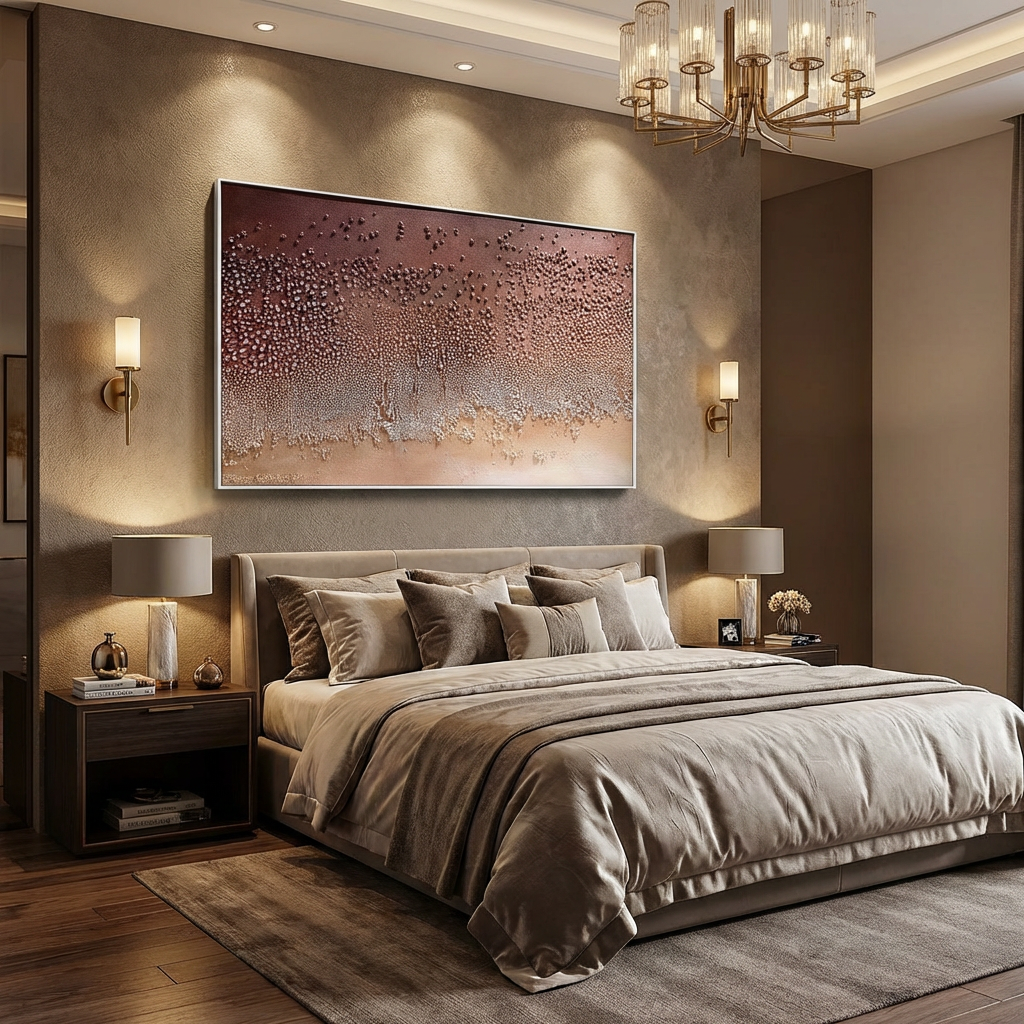
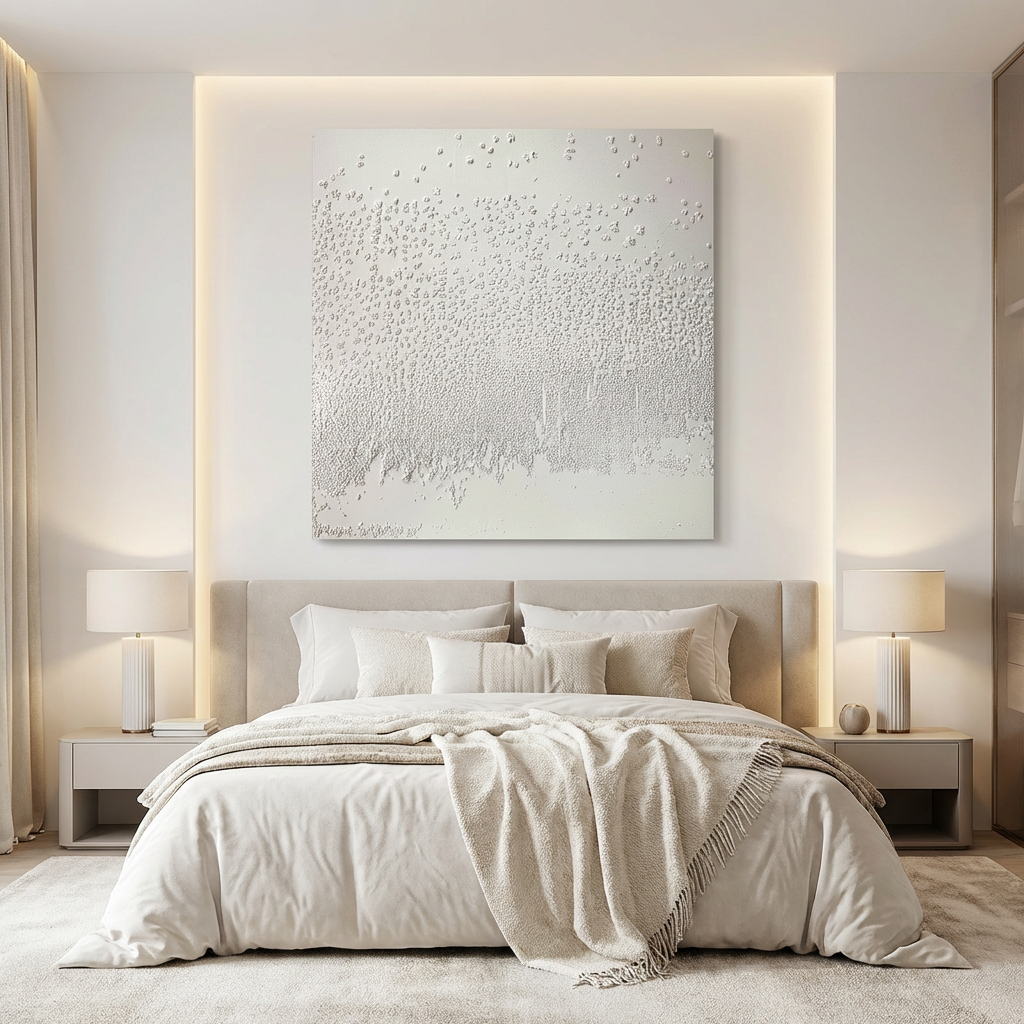
A good example is beige textured abstract paintings that incorporate layered plaster or thick brush textures. These artworks create movement while staying within a harmonious color scheme.
You can explore examples here:
<a href="https://www.inkich.com/">neutral textured wall art collections</a>
 2. Focus on Texture Instead of Color
In minimalist spaces, texture replaces color as the primary design element.
Popular textured wall art techniques include:
-
3D plaster texture art
-
palette knife oil painting
-
layered acrylic texture
-
sculptural canvas surfaces
These textures create subtle shadows and highlights that change depending on lighting throughout the day.
Interior designers often recommend textured art because it adds visual complexity without visual noise.
For inspiration, you can browse curated textured artworks on design platforms like
Dezeen.
3. Select the Right Size for the Bedroom Wall
Scale is extremely important when choosing artwork for a bedroom.
A painting that is too small will disappear on a large wall, while oversized artwork may overpower the minimalist aesthetic.
General sizing guidelines:
| Wall Area | Recommended Art Size |
|---|---|
| Above bed | 60–80% of bed width |
| Feature wall | 40–70 inches wide |
| Narrow wall | vertical artwork |
For example, a large neutral textured canvas above the bed creates a calming focal point while maintaining symmetry.
Many luxury interiors feature one large statement piece instead of multiple small frames, which fits perfectly with minimalist design philosophy.
You can see examples of large-scale neutral artwork here:
<a href="https://www.inkich.com/">modern textured paintings</a>
4. Consider the Frame Style
Frames can dramatically change how artwork feels in a minimalist bedroom.
Best frame options include:
Natural wood frame
-
warm and organic
-
perfect for Scandinavian interiors
Floating frame
-
modern gallery look
-
emphasizes the artwork
No frame (gallery wrap)
-
clean and contemporary
-
common in luxury hotels
Minimalist bedrooms typically benefit from thin wood or floating frames that complement furniture tones.
5. Match the Artwork with Bedroom Materials
Minimalist design is not only about color—it’s also about materials.
Look around your bedroom and consider the materials already present:
-
linen bedding
-
wood furniture
-
wool rugs
-
stone décor
-
ceramic lamps
The best textured wall art echoes these natural elements.
For example:
| Bedroom Element | Matching Art Texture |
|---|---|
| Linen bedding | soft plaster textures |
| Wooden furniture | earthy textured paint |
| Stone décor | sculptural textured canvas |
This approach creates a cohesive and balanced interior design.
6. Use Lighting to Highlight Texture
One of the most overlooked aspects of textured wall art is lighting.
Soft lighting can dramatically enhance the shadows and depth of textured surfaces.
Interior designers often recommend:
-
warm bedside lamps
-
wall washers
-
directional spotlights
These lighting techniques help the artwork come alive and create a relaxing bedroom ambiance.
Lighting guidelines can also be found in resources from
Houzz, a leading platform for interior design inspiration.
Final Thoughts
Choosing the right neutral textured wall art for a beige minimalist bedroom is all about balance.
The goal is to enhance the calm atmosphere while adding subtle artistic depth.
Remember these key tips:
-
Stick to soft neutral palettes
-
Choose texture over bold colors
-
Select proper artwork size
-
Match frames and materials
-
Use lighting to enhance texture
A well-chosen textured painting can transform a minimalist bedroom into a luxury, gallery-inspired retreat.
If you're looking for handcrafted textured artworks designed specifically for modern interiors, explore the curated collection at:
<a href="https://www.inkich.com/">INKICH Modern Textured Wall Art</a>